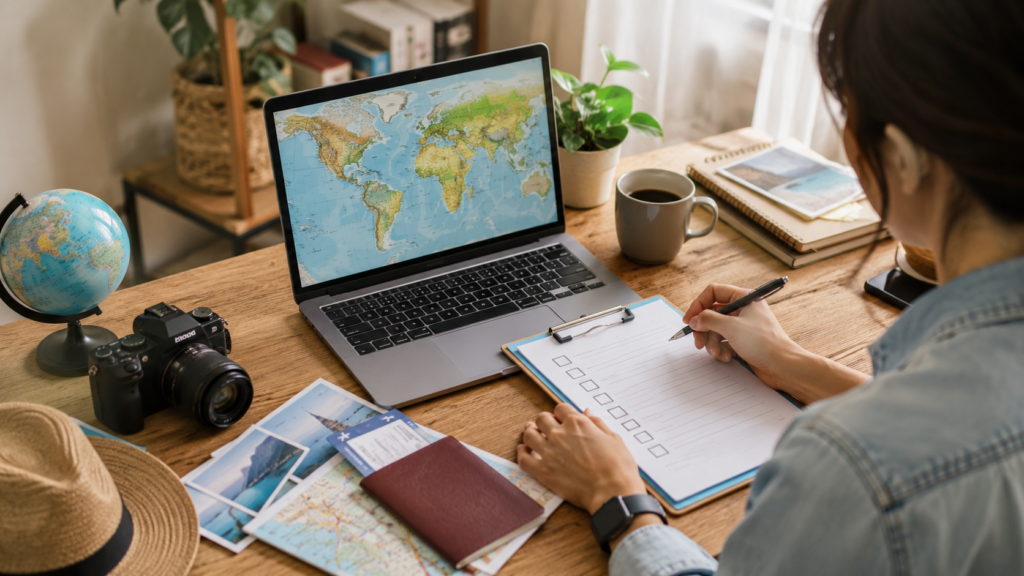
Learn how to plan a trip from start to finish. Follow this simple step-by-step guide to choose a destination, book flights, save money, and enjoy a stress-free vacation.

How to Plan a Trip: A Complete Step-by-Step Guide for Beginners
Planning a trip can feel exciting, but it can also be confusing if you’re traveling for the first time. There are many things to think about, from choosing a destination to booking flights and packing your bags.The good news is that planning a trip doesn’t have to be difficult.If you follow a few simple steps, you can save money, avoid common mistakes, and enjoy a stress-free vacation.This guide will walk you through everything you need to know.
Step 1: Decide Where You Want to Go
Start by choosing a destination that matches your interests and budget.Ask yourself:
Do you want a beach holiday?
Do you enjoy mountains and hiking?
Would you like to explore cities?
Are you looking for adventure or relaxation?
Also, think about your travel budget. Some destinations are much cheaper than others
.Tip: Make a short list of three places and compare costs before making your final decision.
Step 2: Choose the Best Time to Travel
Weather can completely change your travel experience.Before booking anything, check:
Average temperatures Rainy season Peak tourist season Local festivals Public holidays
Traveling during the shoulder season often means lower prices, fewer crowds, and pleasant weather.
Step 3: Set a Travel Budget
Knowing your budget helps you make better decisions.Include expenses like:
Flights
Hotels
Food
Local transport
Attractions Shopping
: Emergency money
Don’t spend your entire budget before your trip begins. Keep some extra money for unexpected costs.
Step 4: Check Passport and Visa Requirements
Before booking your flights, make sure your passport is valid.Many countries require your passport to be valid for at least six months after your travel dates.
Also, check if you need:
A tourist visa
A travel authorization
Vaccination
certificatesDoing this early can save you a lot of stress later.
Step 5: Book Your Flights
Flight prices change often
Here are a few ways to save money
:Book early when possible.
Compare prices on different booking websites.
Be flexible with your travel dates.Consider nearby airports.
Morning or midweek flights are often cheaper than weekend flights.
Step 6: Book Your Accommodation
Choose a place that fits your travel style.
Popular options include
:Hotels
Hostels
Apartments
Guesthouses
Resorts
Before booking, read recent reviews and check the location on a map. A cheaper hotel that is far from everything may cost more in transportation.
Step 7: Plan Your Daily Activities
You don’t need every hour planned, but having a basic itinerary makes your trip smoother.
Write down:
Attractions you want to visit
Restaurants to try
Local markets
Museums
Parks
Day tripsL
eave some free time to explore. Some of the best travel memories happen when you discover something unexpected.
Step 8: Buy Travel Insurance
Travel insurance may seem unnecessary until something goes wrong.
It can help cover:
Medical emergencies
Flight cancellations
Lost luggage
Trip interruptions
For many travelers, it’s a small cost that provides valuable peace of mind.
Step 9: Pack Smart
Packing light makes traveling easier.
Start with the essentials:
Passport
Phone charger
Clothes
Comfortable shoes
Toiletries
Medications
Travel documents
Check your airline’s baggage rules before packing to avoid extra fees.
Step 10: Prepare Before You Leave
A few final checks can prevent problems.
Before leaving home:
Confirm your flight.
Download your boarding pass.
Save hotel information.
Keep digital copies of important documents.
Inform your bank if you’re traveling abroad.
Charge your devices.
Being prepared helps your trip start smoothly.
Common Mistakes to Avoid
Many first-time travelers make the same mistakes.
Avoid these:
Booking everything at the last minute.
Packing too many clothes.
Ignoring visa requirements.
Forgetting travel insurance.
Not checking the weather.
Spending your entire budget too quickly.
Learning from these mistakes can make your trip much more enjoyable.
How far in advance should I plan a trip?
For international travel, planning three to six months ahead often gives you more choices and better prices. Domestic trips usually need less time.
How much money should I save for a trip?
It depends on your destination and travel style. Research average costs for flights, accommodation, food, and activities, then add extra money for unexpected expenses.
Should I book everything before traveling?
It’s usually best to book flights and accommodation in advance. For activities, you can book popular attractions early and leave some flexibility for the rest of your trip.
I would like to give this advice.
Planning a trip doesn’t have to be stressful. By taking it one step at a time, you can stay organized, manage your budget, and enjoy the journey from the moment you start planning.Remember that every traveler has different preferences. Use this guide as a starting point, then adjust it to fit your travel style and destination.The best trips are not always the most expensive—they are the ones that are well planned and leave you with unforgettable memories.